Beyond the Beginner Stage: How to Build on Your Skiing Skills

Beyond the Beginner Stage: How to Build on Your Skiing Skills
Once you’ve mastered the basics—stopping, turning, and riding the lift without mishaps—a whole new world opens up on the slopes. Moving from beginner to intermediate isn’t just about going faster; it’s about control, confidence, and understanding how your skis interact with the snow. Here’s how to take your skiing to the next level and make every run more rewarding.
Refine Your Technique
Even if you’re comfortable on green and easy blue runs, there’s still plenty to gain from fine-tuning your fundamentals. Small adjustments in posture and balance can make a big difference.
- Focus on balance – Keep your weight evenly distributed over both skis, and avoid leaning too far back. A slightly forward stance gives you better control and stability.
- Use the full ski – Feel how your skis engage with the snow through each turn. Practice edging gradually so your turns become smoother and more controlled.
- Look ahead – Many skiers fix their eyes on their skis, but that limits awareness. Look in the direction you want to go to anticipate terrain changes and plan your line.
Even if you’re past the beginner stage, a few hours with a certified instructor can be a great investment. A professional can spot subtle habits you might not notice and give you drills tailored to your level.
Challenge Yourself Gradually
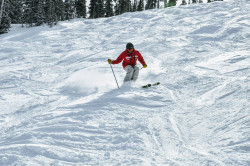
It’s tempting to jump straight onto black diamonds, but progress comes from steady, manageable challenges. Push your limits in small steps while keeping safety and control in mind.
- Try steeper blue runs to practice maintaining rhythm and speed through turns.
- Work on short, quick turns to improve agility and reaction time.
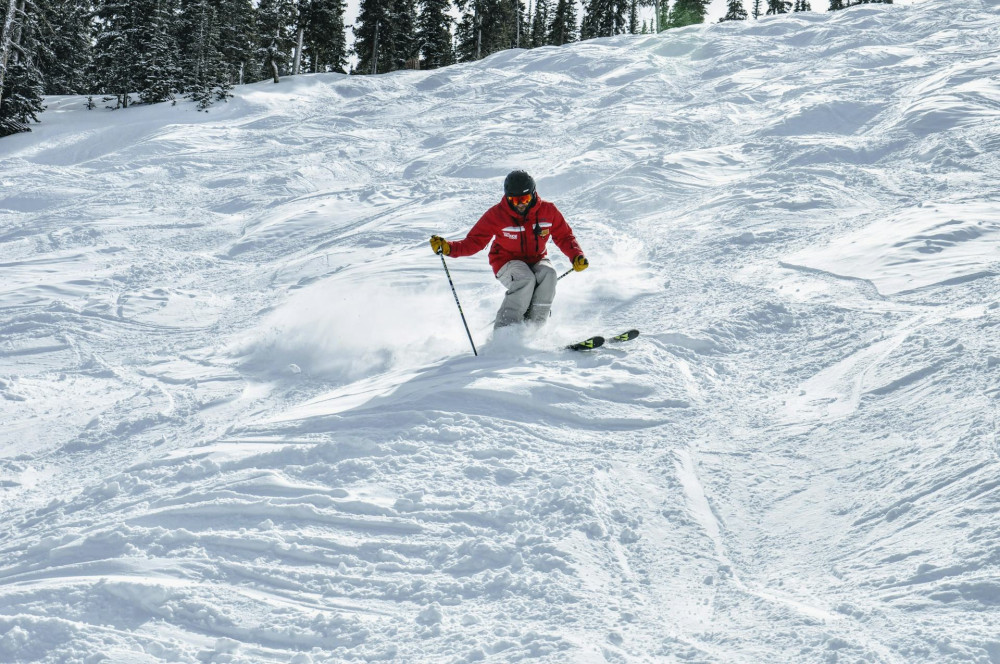
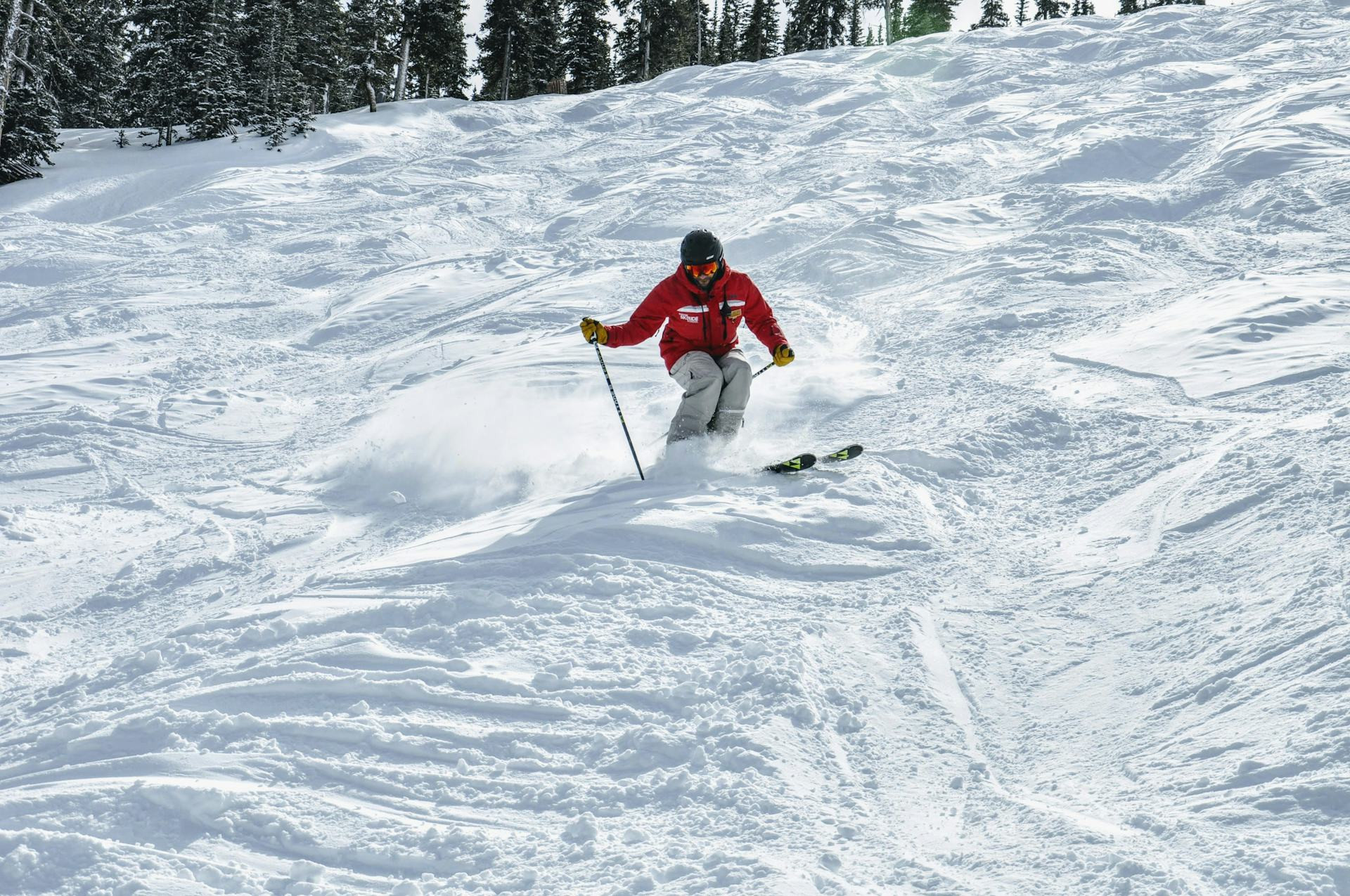
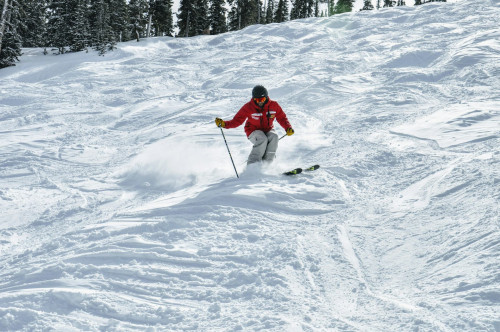
- Experiment with different snow conditions—hardpack, soft powder, or light moguls—to learn how to adapt your technique.
When you feel confident, start exploring easier black runs, but take it at your own pace. Remember: control always comes before speed.
Master Pole Use and Rhythm
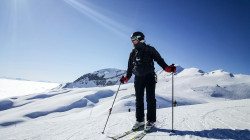
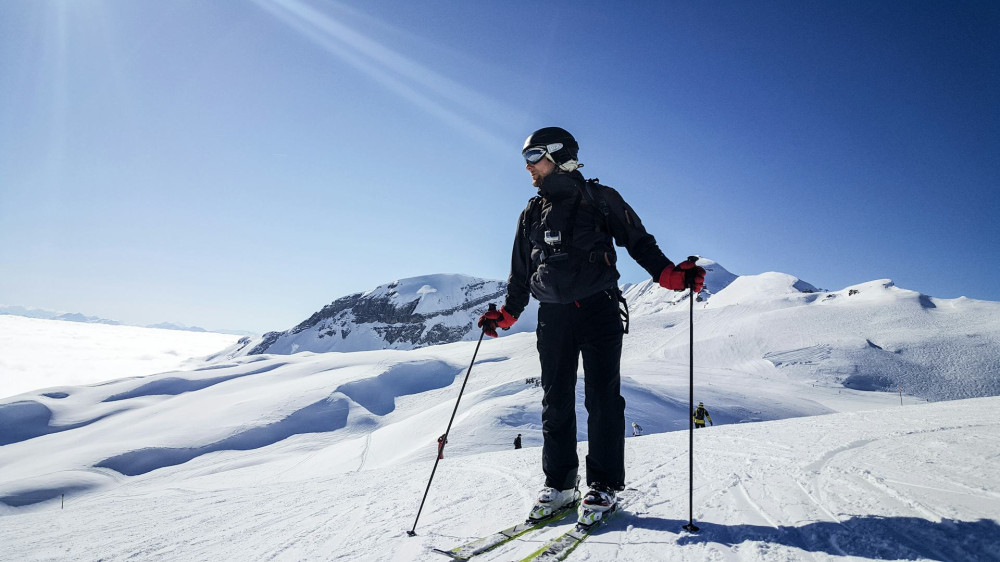
Poles aren’t just for balance—they help you find rhythm and timing in your turns. Many intermediate skiers forget to use them effectively, but proper pole planting can make your skiing more fluid.
Practice planting your pole just before each turn so the motion becomes part of your rhythm. This helps stabilize your upper body while your legs do the work, leading to smoother, more consistent turns.
Train Your Body for Skiing
Skiing demands strength, endurance, and flexibility. The better shape you’re in, the easier it is to maintain good form—even late in the day when fatigue sets in.
Focus on exercises that strengthen your legs, core, and balance. Cycling, running, and strength training are great year-round options, but you can also do ski-specific moves like squats, planks, and single-leg balance drills. A strong, stable body not only improves performance but also reduces the risk of injury.
Explore New Terrain and Disciplines
Once you’re comfortable on groomed runs, it’s exciting to branch out and try new types of skiing. Each discipline challenges your skills in different ways and keeps your learning fresh.
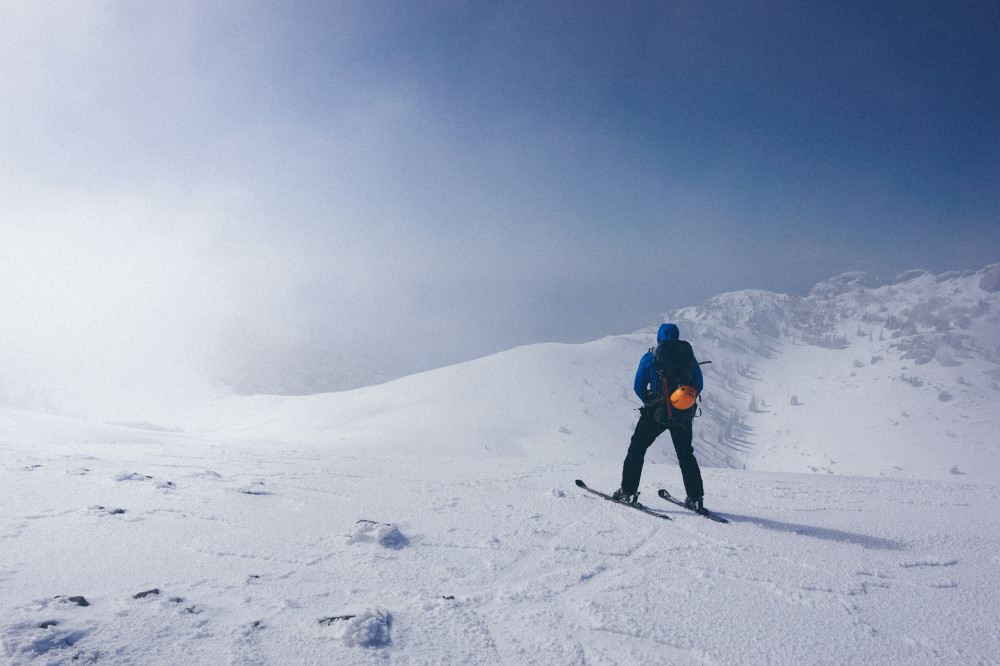
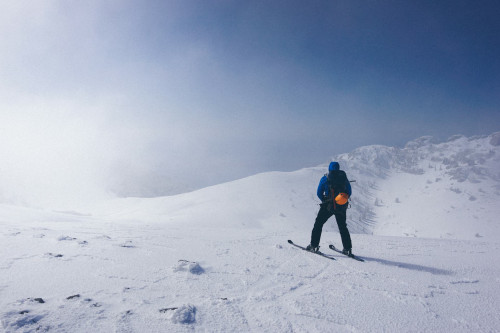
- Off-piste and backcountry – Offers freedom and adventure but requires avalanche awareness, safety gear, and guidance from an experienced instructor or guide.
- Cross-country skiing – Builds endurance and balance while giving you a great cardio workout.
- Terrain parks – For those who want to work on jumps, rails, and coordination in a controlled environment.
Exploring new terrain helps you understand snow, speed, and movement from new perspectives—and makes you a more versatile skier overall.
Make the Most of Your Ski Days
Improvement isn’t just about technique; it’s also about awareness. Pay attention to snow conditions, weather, and your own energy levels. Take breaks when needed, and reflect on what’s working and what could be better.
A great tip is to have a friend film you skiing. Watching yourself can be eye-opening and gives you a clear idea of what to focus on next time.
Læs også:
Skiing as a Lifelong Journey
Becoming a better skier is an ongoing process. Even advanced skiers continue to refine their technique and balance. The key is to stay curious and enjoy the learning process.
When you invest time in developing your skills, you open the door to even greater experiences on the mountain—from your first perfectly carved turns to the thrill of floating through fresh powder. That’s when skiing truly becomes a lifelong passion.
Læs også: