Strengthen Your Horse’s Core Muscles with Targeted Exercises

Strengthen Your Horse’s Core Muscles with Targeted Exercises
A strong, supple horse starts with a well-developed core. The deep muscles around the back, abdomen, and pelvis provide stability, balance, and the ability to carry a rider correctly. When these muscles are strong, the horse moves more freely, stays sounder, and performs better—whether you ride dressage, jump, or enjoy trail riding. Here’s a guide to help you strengthen your horse’s core through simple, targeted exercises.
Why Core Strength Matters
Your horse’s core muscles act like a natural “corset,” supporting the spine and helping distribute the rider’s weight evenly. If these muscles are weak, the horse may compensate by hollowing the back, leaning on the forehand, or losing balance in turns and transitions. Over time, this can lead to strain and discomfort.
A strong core allows the horse to lift its back, engage the hindquarters, and move with greater ease. It’s the foundation for all healthy movement—and essential for long-term soundness and performance.
Start from the Ground – Activate Muscles Without a Rider
Before you get in the saddle, groundwork can help your horse find balance and build strength without the added weight of a rider.
- Hill work: Walking up and down gentle slopes strengthens both the core and hindquarters. Keep the pace steady and encourage long, relaxed strides.
- Pole work: Set ground poles at varying distances. As your horse steps over them, the abdominal and back muscles engage to maintain rhythm and balance.
- Carrot stretches: Use a treat to encourage your horse to bend its neck toward the chest, shoulder, and flank. These stretches improve flexibility and activate the stabilizing muscles along the spine.
- Lunging in correct posture: Lunge your horse in a soft, round frame where it seeks contact forward and down. Avoid overbending the neck—the goal is an active, lifted back, not a low head.
These exercises can be done a few times a week as a complement to your regular riding routine.
Læs også:
Under Saddle – Focus on Balance and Engagement
When riding, your goal is to help your horse use its body correctly. This takes patience, consistency, and attention to detail.
- Transitions: Frequent transitions between walk, trot, and canter encourage the horse to engage the hindquarters and lift the back. Think of riding “uphill,” with energy flowing from behind.
- Lateral work: Shoulder-in, haunches-in, and leg-yield strengthen the oblique core muscles and improve suppleness. Start at the walk and gradually increase difficulty.
- Cavaletti in trot: Low poles in trot help the horse lift its legs and activate the abdominal and back muscles. Maintain a steady rhythm and even tempo.
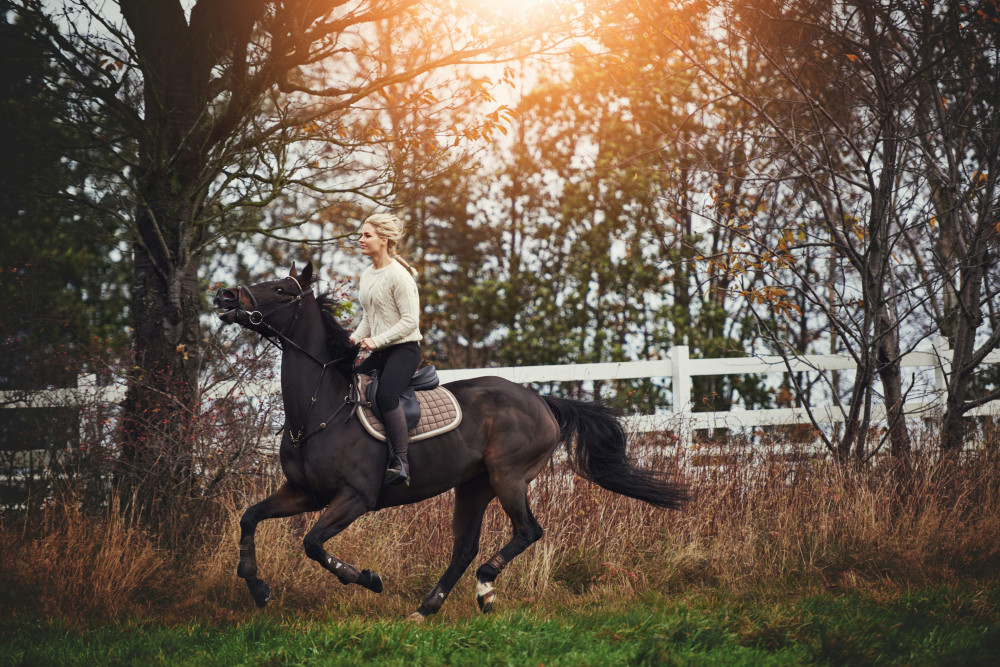
- Cantering in a light seat: By taking weight off the horse’s back, you allow it to move more freely and strengthen the core without strain.
Quality matters more than quantity. Short, focused sessions are more effective than long, tiring workouts.
Variety and Recovery
Core strength develops best through varied training. Alternate between riding, groundwork, trail rides, and rest days. Muscles need time to recover and grow stronger.
A good rule of thumb is to include at least one easy day per week with light exercise or turnout. This keeps your horse mentally fresh and helps prevent overtraining.
Signs of Progress
As your horse’s core becomes stronger, you’ll notice clear improvements:
- The back feels more elastic under the saddle.
- The horse carries itself better and no longer leans on the forehand.
- Transitions become smoother, and balance improves.
- The topline and hindquarters appear more rounded and symmetrical.
These are subtle but reliable signs that your training is paying off.
An Investment in Your Horse’s Well-Being
Building your horse’s core strength isn’t just about performance—it’s about health and comfort. A horse with a strong, supple body is less prone to injury, moves more naturally, and enjoys its work. With patience, variety, and consistent training, you’ll create a solid foundation that supports your horse’s well-being and partnership for years to come.
Læs også: